
# Stages of Knee Osteoarthritis Explained
**Dr. Raghavendra Naveen**
**Orthopedic Surgeon | Robotic Joint Replacement & Arthroscopy Specialist**
**Lead Consultant, Sparsh Hospital, Yelahanka, Bangalore**
📞 **9632569999**
Knee osteoarthritis (OA) is a progressive condition in which the protective cartilage within the knee gradually wears away. Understanding the stages of knee osteoarthritis helps patients seek timely treatment and prevent further joint damage.
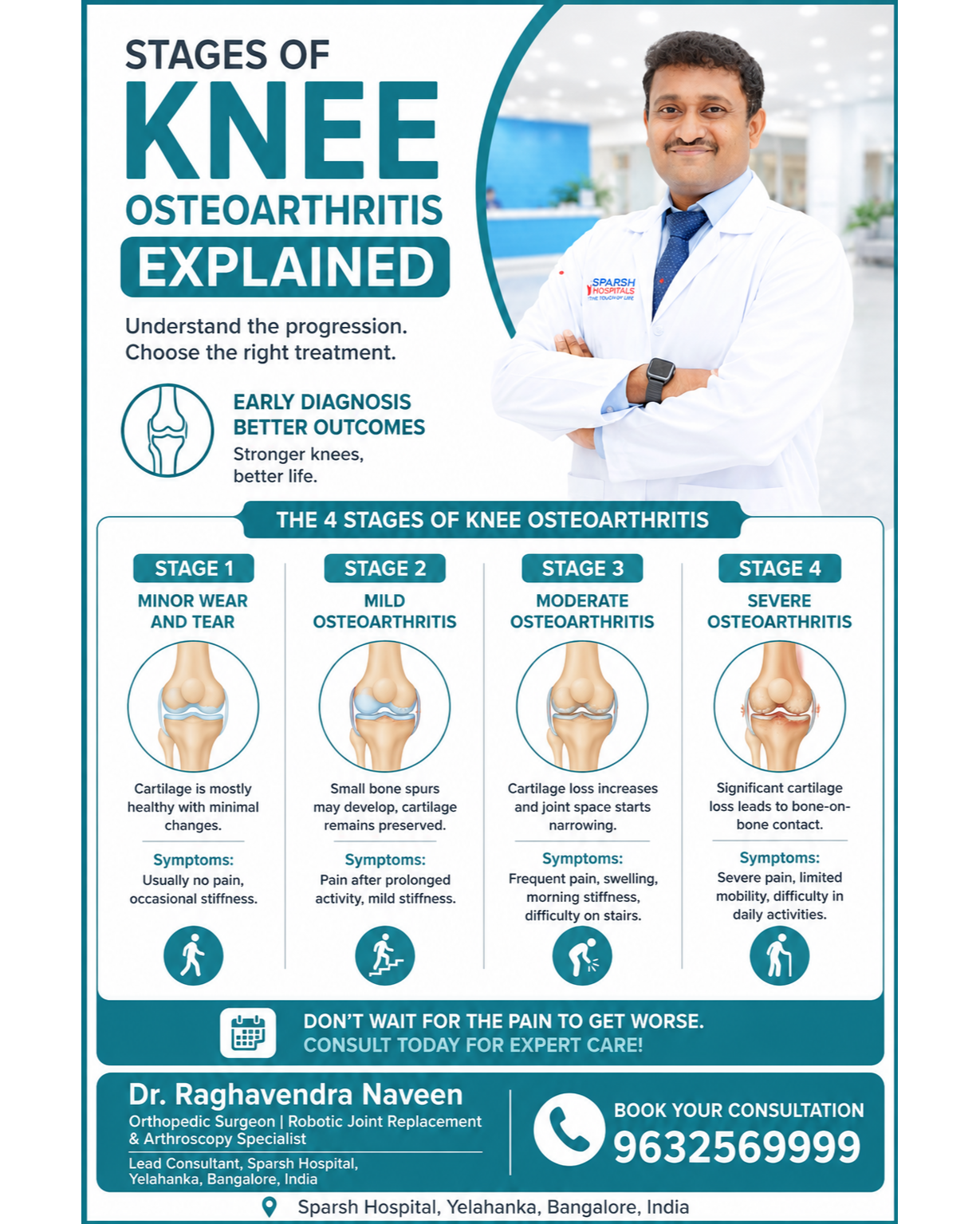
## Stage 1: Minor Wear and Tear
The cartilage remains largely healthy with minimal changes.
**Symptoms:**
* Usually no pain
* Occasional stiffness
* Mild discomfort after strenuous activity
**Treatment:**
Lifestyle modification, exercise, weight management, and regular monitoring.
## Stage 2: Mild Osteoarthritis
Small bone spurs may begin to develop while cartilage remains relatively preserved.
**Symptoms:**
* Pain after prolonged walking
* Mild stiffness
* Occasional knee discomfort
**Treatment:**
Physiotherapy, strengthening exercises, activity modification, and medications if needed.
## Stage 3: Moderate Osteoarthritis
Cartilage loss becomes more evident and joint space starts narrowing.
**Symptoms:**
* Frequent knee pain
* Swelling
* Morning stiffness
* Difficulty climbing stairs
**Treatment:**
Physiotherapy, weight reduction, PRP therapy, injections, and non-surgical joint preservation treatments.
## Stage 4: Severe Osteoarthritis
Significant cartilage loss results in bone-on-bone contact.
**Symptoms:**
* Severe pain
* Limited mobility
* Persistent swelling
* Difficulty performing daily activities
**Treatment:**
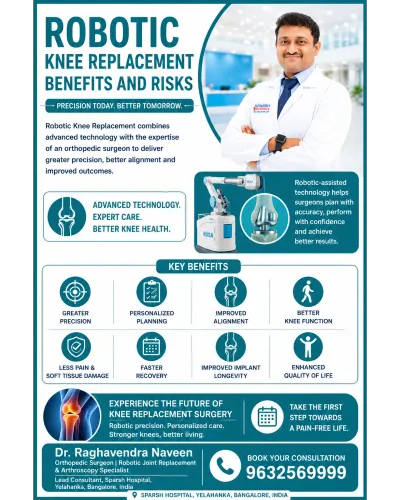
Advanced treatments including robotic-assisted or total knee replacement surgery may be recommended.
## Do's
✔ Maintain a healthy body weight
✔ Exercise regularly with low-impact activities
✔ Strengthen thigh and leg muscles
✔ Follow physiotherapy advice
✔ Seek early orthopedic evaluation
✔ Stay active within comfort limits
## Don'ts
❌ Ignore persistent knee pain
❌ Delay treatment until arthritis becomes severe
❌ Gain excess weight
❌ Self-medicate long-term
❌ Perform high-impact activities during flare-ups
❌ Remain inactive for prolonged periods
## Why Early Treatment Matters
Early diagnosis can help slow disease progression, reduce pain, improve mobility, and potentially delay the need for surgery. Treatment options vary depending on the stage of osteoarthritis and individual patient needs.
## Frequently Asked Questions
**How many stages are there in knee osteoarthritis?**
Knee osteoarthritis is commonly classified into four stages ranging from minor wear to severe bone-on-bone arthritis.
**Can early-stage knee osteoarthritis be reversed?**
Cartilage damage cannot be completely reversed, but progression can often be slowed with proper treatment.
**Which stage requires knee replacement?**
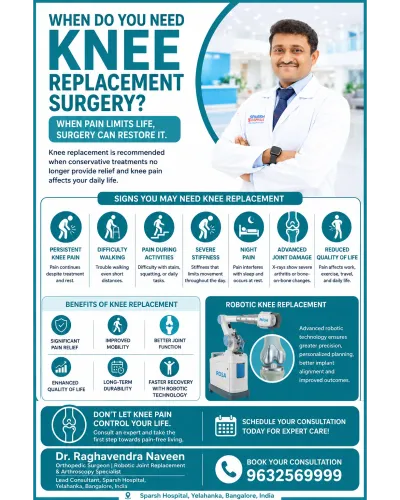
Stage 4 osteoarthritis is the stage most likely to require knee replacement when symptoms significantly affect quality of life.
**Can exercise help all stages of arthritis?**
Yes. Appropriate exercises help improve strength, flexibility, and knee function at every stage.
**When should I see an orthopedic specialist?**
If knee pain, swelling, stiffness, or difficulty walking persists despite rest and home care.
## Book Your Consultation
**Dr. Raghavendra Naveen**
Orthopedic Surgeon | Robotic Joint Replacement & Arthroscopy Specialist
Lead Consultant, Sparsh Hospital, Yelahanka, Bangalore
📞 **9632569999**