
# PRP Injection for Knee Osteoarthritis: Does It Work?
**Dr. Raghavendra Naveen**
**Orthopedic Surgeon | Robotic Joint Replacement & Arthroscopy Specialist**
**Lead Consultant, Sparsh Hospital, Yelahanka, Bangalore**
📞 **9632569999**
Knee osteoarthritis is a common cause of knee pain, stiffness, and reduced mobility. Platelet-Rich Plasma (PRP) therapy has emerged as an effective non-surgical treatment option for patients with early to moderate knee osteoarthritis who wish to reduce pain and improve knee function.
## What Is PRP Therapy?
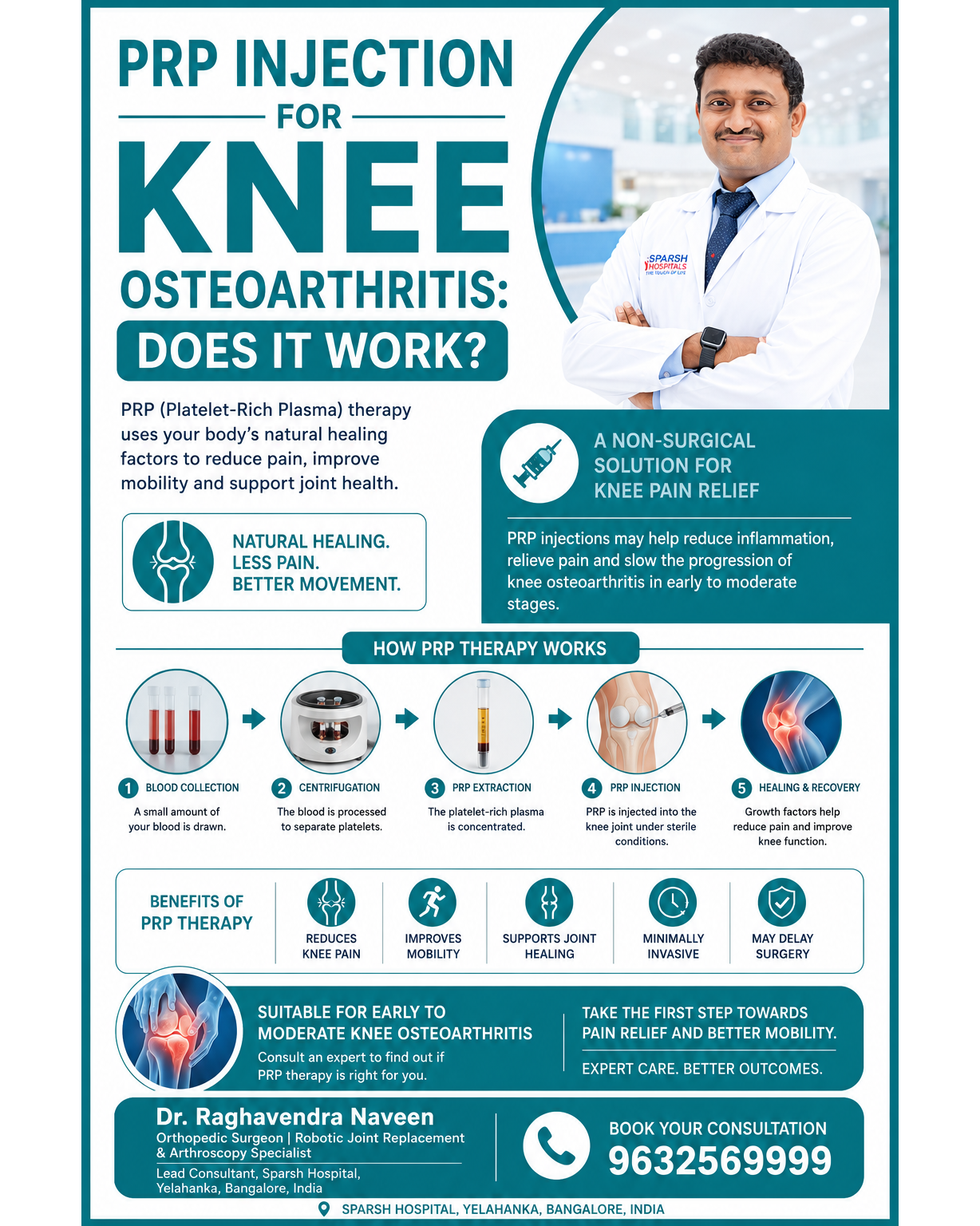
PRP (Platelet-Rich Plasma) is prepared using a small sample of the patient's own blood. The blood is processed to concentrate platelets containing growth factors, which are then injected into the knee joint under sterile conditions.
## Does PRP Work for Knee Osteoarthritis?
Yes. PRP therapy may help reduce inflammation, improve joint function, decrease pain, and potentially slow the progression of osteoarthritis in selected patients.
PRP is generally most effective for:
* Early osteoarthritis
* Mild to moderate arthritis
* Active individuals with persistent knee pain
* Patients seeking to delay surgery
## Benefits of PRP Injection
✔ Minimally invasive procedure
✔ Uses the patient's own blood
✔ Reduced knee pain
✔ Improved mobility and function
✔ Short recovery period
✔ May delay the need for knee replacement
## Who Is a Good Candidate?
PRP may be suitable for patients who have:
* Early to moderate knee osteoarthritis
* Persistent pain despite physiotherapy
* Difficulty walking or climbing stairs
* Mild cartilage damage
* Desire to avoid or postpone surgery
## When Is PRP Less Effective?
PRP may provide limited benefit in:
* Advanced bone-on-bone arthritis
* Severe knee deformity
* Extensive cartilage loss
In such cases, other treatment options including knee replacement may be more appropriate.
## What to Expect After PRP Injection?
Most patients return to routine activities within a few days.
Improvement is usually gradual and may continue over several weeks as healing processes occur within the joint.
## Do's After PRP Treatment
✔ Follow your orthopedic specialist's instructions
✔ Continue prescribed physiotherapy
✔ Maintain a healthy body weight
✔ Perform recommended strengthening exercises
✔ Stay hydrated
✔ Attend follow-up appointments
## Don'ts After PRP Treatment
❌ Avoid strenuous activities immediately after injection
❌ Avoid high-impact exercises during recovery
❌ Ignore persistent swelling or unusual symptoms
❌ Self-medicate without medical advice
❌ Delay follow-up evaluations
## Frequently Asked Questions
**Is PRP safe for knee osteoarthritis?**
Yes. Since PRP is prepared from your own blood, it is generally considered safe when performed by trained specialists.
**How long does PRP take to work?**
Many patients begin noticing improvement within a few weeks, with continued benefits over several months.
**How many PRP injections are required?**
The number of injections varies depending on arthritis severity and individual response.
**Can PRP regenerate cartilage?**
PRP may support healing and reduce inflammation, but it does not completely regenerate severely damaged cartilage.
**Can PRP prevent knee replacement surgery?**
In selected patients with early to moderate arthritis, PRP may help delay the need for surgery.
## Book Your Consultation
**Dr. Raghavendra Naveen**
Orthopedic Surgeon | Robotic Joint Replacement & Arthroscopy Specialist
Lead Consultant, Sparsh Hospital, Yelahanka, Bangalore
📞 **9632569999**