# Robotic Knee Replacement: Benefits and Risks
**Dr. Raghavendra Naveen**
**Orthopedic Surgeon | Robotic Joint Replacement & Arthroscopy Specialist**
**Lead Consultant, Sparsh Hospital, Yelahanka, Bangalore**
📞 **9632569999**
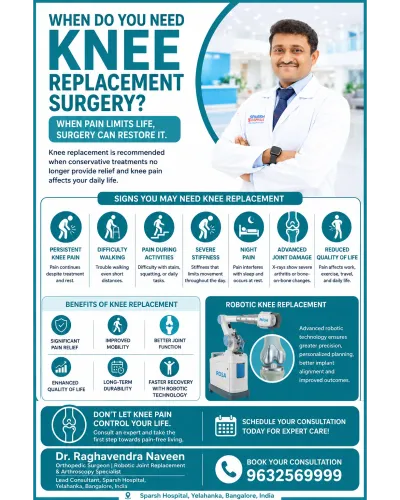
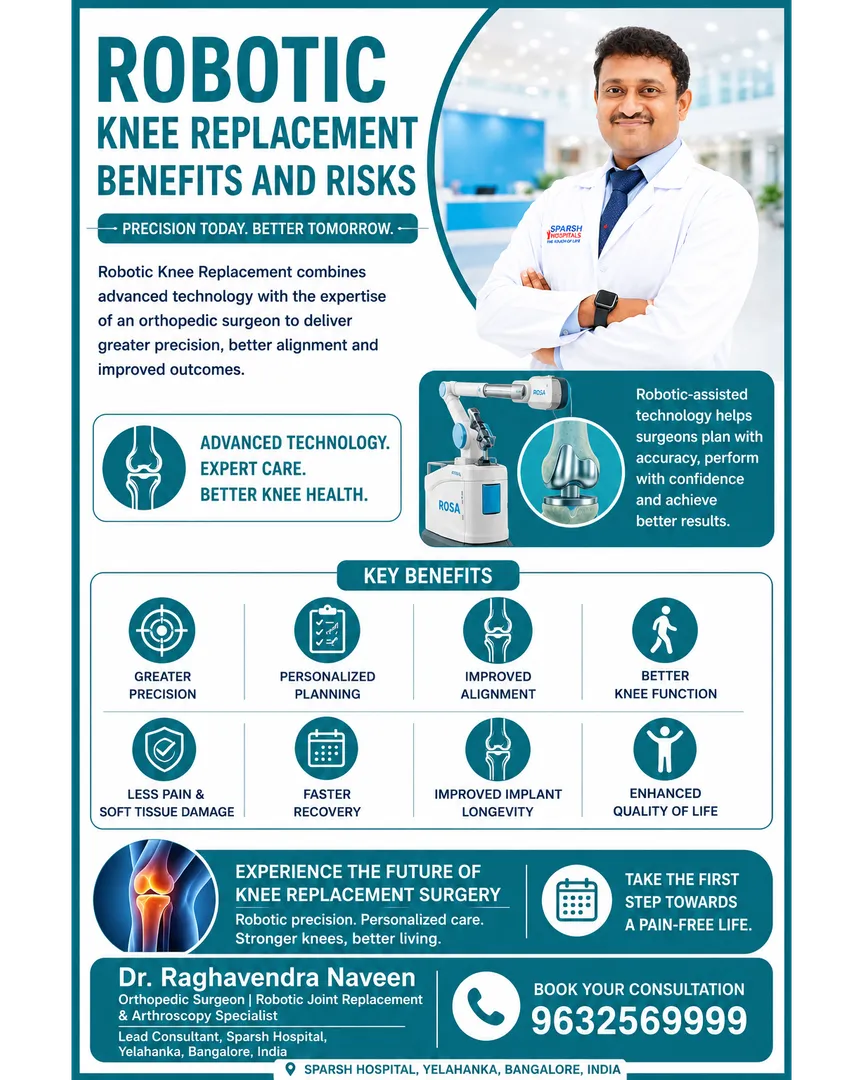
Robotic Knee Replacement is an advanced surgical technique that combines the expertise of the orthopedic surgeon with robotic-assisted technology to improve precision during knee replacement surgery. It is increasingly preferred for patients with advanced knee osteoarthritis seeking improved accuracy and faster recovery.
## What Is Robotic Knee Replacement?
Robotic-assisted knee replacement uses advanced imaging and computer-guided technology to help surgeons plan and perform the procedure with greater precision.
The robotic system assists in:
* Preoperative planning
* Accurate bone preparation
* Precise implant positioning
* Improved alignment of the knee joint
The surgeon remains in complete control throughout the procedure.
## Benefits of Robotic Knee Replacement
✔ Greater surgical precision
✔ Personalized surgical planning
✔ Improved implant alignment
✔ Better knee function
✔ Reduced soft tissue damage
✔ Less postoperative pain in many patients
✔ Faster rehabilitation and recovery
✔ Improved implant longevity potential
## Who May Benefit?
Robotic knee replacement may be suitable for patients with:
* Advanced knee osteoarthritis
* Bone-on-bone arthritis
* Severe knee pain affecting daily activities
* Knee deformity
* Failure of non-surgical treatments
## Potential Risks
Like all surgeries, robotic knee replacement carries some risks, including:
* Infection
* Blood clots
* Stiffness
* Swelling
* Persistent pain
* Implant-related complications
* Rare need for revision surgery
However, these risks are generally low when surgery is performed by an experienced joint replacement specialist.
## Do's
✔ Follow preoperative instructions carefully
✔ Maintain a healthy body weight
✔ Participate actively in physiotherapy
✔ Control diabetes and other medical conditions
✔ Attend scheduled follow-up visits
✔ Continue prescribed rehabilitation exercises
## Don'ts
❌ Delay surgery when severe arthritis significantly affects quality of life
❌ Ignore postoperative rehabilitation
❌ Resume high-impact activities too early
❌ Miss follow-up appointments
❌ Self-medicate without medical advice
❌ Neglect strengthening exercises after surgery
## Recovery After Robotic Knee Replacement
Most patients begin walking with assistance within a day after surgery. Recovery continues through a structured rehabilitation program aimed at restoring strength, mobility, and confidence in daily activities.
## Frequently Asked Questions
**Is robotic knee replacement better than conventional knee replacement?**
Robotic technology provides enhanced precision and implant positioning, which may improve outcomes in selected patients.
**Is the robot performing the surgery?**
No. The surgeon performs the procedure while using robotic assistance for improved accuracy.
**How long does robotic knee replacement last?**
Modern knee implants can last 15–20 years or longer depending on activity level and overall health.
**Is recovery faster with robotic knee replacement?**
Many patients experience earlier mobility and improved recovery due to precise surgical planning and soft tissue preservation.
**Who is the ideal candidate?**
Patients with advanced osteoarthritis, severe pain, and reduced mobility despite conservative treatment.
## Book Your Consultation
**Dr. Raghavendra Naveen**
Orthopedic Surgeon | Robotic Joint Replacement & Arthroscopy Specialist
Lead Consultant, Sparsh Hospital, Yelahanka, Bangalore
📞 **9632569999**
**Dr. Raghavendra Naveen**
**Orthopedic Surgeon | Robotic Joint Replacement & Arthroscopy Specialist**
**Lead Consultant, Sparsh Hospital, Yelahanka, Bangalore**
📞 **9632569999**
Robotic Knee Replacement is an advanced surgical technique that combines the expertise of the orthopedic surgeon with robotic-assisted technology to improve precision during knee replacement surgery. It is increasingly preferred for patients with advanced knee osteoarthritis seeking improved accuracy and faster recovery.
## What Is Robotic Knee Replacement?
Robotic-assisted knee replacement uses advanced imaging and computer-guided technology to help surgeons plan and perform the procedure with greater precision.
The robotic system assists in:
* Preoperative planning
* Accurate bone preparation
* Precise implant positioning
* Improved alignment of the knee joint
The surgeon remains in complete control throughout the procedure.
## Benefits of Robotic Knee Replacement
✔ Greater surgical precision
✔ Personalized surgical planning
✔ Improved implant alignment
✔ Better knee function
✔ Reduced soft tissue damage
✔ Less postoperative pain in many patients
✔ Faster rehabilitation and recovery
✔ Improved implant longevity potential
## Who May Benefit?
Robotic knee replacement may be suitable for patients with:
* Advanced knee osteoarthritis
* Bone-on-bone arthritis
* Severe knee pain affecting daily activities
* Knee deformity
* Failure of non-surgical treatments
## Potential Risks
Like all surgeries, robotic knee replacement carries some risks, including:
* Infection
* Blood clots
* Stiffness
* Swelling
* Persistent pain
* Implant-related complications
* Rare need for revision surgery
However, these risks are generally low when surgery is performed by an experienced joint replacement specialist.
## Do's
✔ Follow preoperative instructions carefully
✔ Maintain a healthy body weight
✔ Participate actively in physiotherapy
✔ Control diabetes and other medical conditions
✔ Attend scheduled follow-up visits
✔ Continue prescribed rehabilitation exercises
## Don'ts
❌ Delay surgery when severe arthritis significantly affects quality of life
❌ Ignore postoperative rehabilitation
❌ Resume high-impact activities too early
❌ Miss follow-up appointments
❌ Self-medicate without medical advice
❌ Neglect strengthening exercises after surgery
## Recovery After Robotic Knee Replacement
Most patients begin walking with assistance within a day after surgery. Recovery continues through a structured rehabilitation program aimed at restoring strength, mobility, and confidence in daily activities.
## Frequently Asked Questions
**Is robotic knee replacement better than conventional knee replacement?**
Robotic technology provides enhanced precision and implant positioning, which may improve outcomes in selected patients.
**Is the robot performing the surgery?**
No. The surgeon performs the procedure while using robotic assistance for improved accuracy.
**How long does robotic knee replacement last?**
Modern knee implants can last 15–20 years or longer depending on activity level and overall health.
**Is recovery faster with robotic knee replacement?**
Many patients experience earlier mobility and improved recovery due to precise surgical planning and soft tissue preservation.
**Who is the ideal candidate?**
Patients with advanced osteoarthritis, severe pain, and reduced mobility despite conservative treatment.
## Book Your Consultation
**Dr. Raghavendra Naveen**
Orthopedic Surgeon | Robotic Joint Replacement & Arthroscopy Specialist
Lead Consultant, Sparsh Hospital, Yelahanka, Bangalore
📞 **9632569999**
Keywords